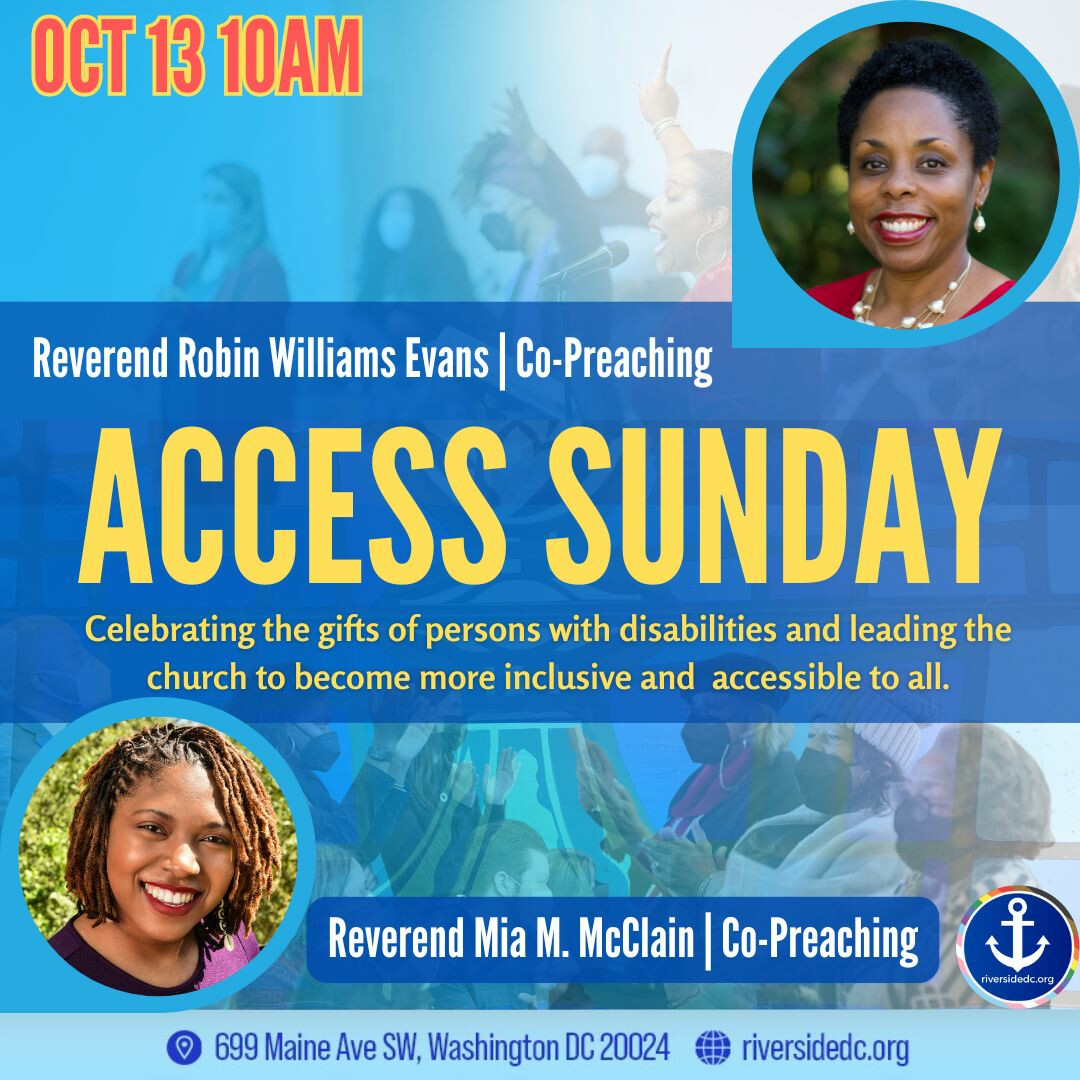
Excerpt from Rev. Mia M. McClain's portion of the sermon given on 10/13/24
Genesis 1:1-2, 26-27a | Translation of The Reverend Wil Gafney, PhD
1 When beginning he, God, created the heavens and the earth, 2 the earth was shapeless and formless and bleakness covered the face of the deep, while the Spirit of God, she, fluttered over the face of the waters.
26 And God said, “Let us make humankind in our image, according to our likeness; and let them rule the fish of the sea, and the birds of the heavens, and the animals, and the whole earth, and over every creeping creature that creeps upon the earth.”
27 So God created humankind in God’s own image,
in God’s own image, God created them;
Out of chaos: CREATIVITY!
God begins to create in the midst of chaos, which means that there was something present when God began to create. God was not creating out of nothingness. It might have been formless and shapeless, but in the midst of the formlessness and shapelessness, God says, “Let there be!”
God begins to organize the chaos, and we see
The diversity of God’s creativity!
God says: Let there be light, and let there be land, and there be vegetation,
And then in verse 26, God says this:
“Let us make humankind in our image,”
There is pluralism present in that very statement. There is diversity present in that statement. There is multiplicity present, which means that God is not a God of homogeneity--a creation where every creature looks like, thinks alike, or moves through the world in the same ways.
There is DIVERSITY in God’s CREATIVITY.
“Let us make humankind in our image.”
For Christians, one of our foundational texts asserts that the Word of God became flesh—that is to say that God came down here in bodily form to dwell with us and show us a way. So, “bodily experiences are revelatory to God” (Jane Deland, Images of God Through the Lens of Disability). But whose body?
Whose body is of revelatory value to God? Whose mind is significant to God?
Is the image of God only able-bodied and with a preferred set of cognitive abilities?
In her master’s thesis paper, Jane Deland suggests that the very idea of being made in the image of God counters a lot of the cultural assumptions prevailing at the time Genesis was compiled. "In ancient Egypt and Mesopotamia, pharaohs and kings were the only ones who were thought to be made in the image of gods. Genesis [however] proclaims a revolutionary, democratic concept: every person is regal before God;”
You don’t have to be king or a Pharoah to be regal before God
You don’t have to have position and power to be regal before God
You don’t have to be able to stand up when you preach or be able to speak at all to be regal before God
This telling of the creation story in Genesis 1 opens up a realm of infinite possibilities that suggests that our varying capabilities and identities are beautiful to the all-encompassing God-unit.
“Let us make humankind in our image.”
When God says, “make them our image,” God means:
- Make them like those of us with developmental disabilities
- Make them like those of us with dyslexia
- Make them like those of us with restrictive growth
- Make them like those of us with hearing loss
- With low vision
- With loss of taste
- With autoimmune deficiencies
- With wheelchairs as companions
- With mental illness
Make them in OUR image!
And we don’t have to do anything special to maintain our statuses as part of the ever-expanding Imago Dei. Unfortunately, so many of us have felt out of the fold of God’s imaging. We have lived in a world that focuses on our inabilities instead of our capabilities (Dr. Wayne Evans)
It seems like the core of our malfunction throughout the course of time has been connected to a narrow conception of the image of God, and thus, the dishonoring of the images of God that do not look like that of the dominant culture: that is often white, male, able-bodied, with a certain kind of mental capacity, and beyond. What, then, do we say to these things?
- As a community of faith, we must endeavor to do continual theological reflection that is liberative for ALL of creation, most notably those living with disability and unique capabilities. And that theological reflection must turn into corrective action!
- If we are to move in the direction of full affirmation and inclusivity, we must reject the concept of perfection that has been given to us that posits a certain set of abilities as the norm.
- We must proclaim that disability is inherent to God’s creation. It is not something that needs to be prayed away. It is not a punishment. In fact, when God sees us—with their varying abilities—I believe God smiles! God sees God’s reflection in us and God smiles.
No matter what the world says about you, God smiles on you!
No matter how the world tries to limit you to your diagnosis, God smiles on you.
God loves you/me/us.
God’s grace is for you/me/us.
And it’s not contingent on anything but our capacity to receive it.
God made us who we are!
We are the images of God!

Login To Leave Comment